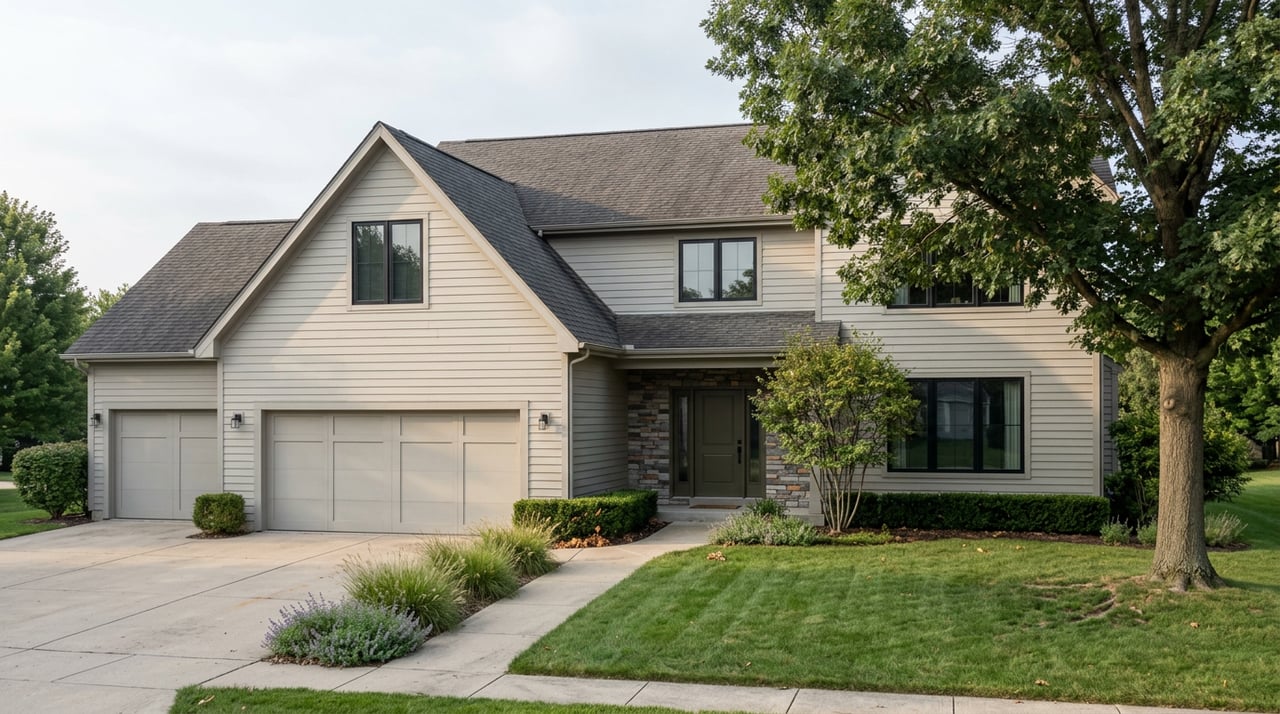
In early October 2025, a demolition crew showed up at 142 East First Street in Hinsdale to take down a house that both the village's Historic Preservation Commission and its seven-member Board of Trustees had voted unanimously to save. The 1869 Italianate known locally as the Hallmark House, famous for a 1970s Hallmark Cards commercial filmed on its porch, came down anyway.
If you're comparing Hinsdale to other western suburbs right now, that single fact tells you more about the market than any median price. The village has spent four years building one of the more admired teardown-prevention programs in the Chicago area, and the aggregate numbers show it working. But the story of what happened on First Street, and on at least two other Robbins Park lots that same year, shows the exact seam where that program stops working. If you're touring homes here, that seam is worth understanding before you fall for a porch.
Why a Unanimous Vote Wasn't Enough
Developer Robert Cimala, president of Legacy Homes Cimala, bought the Hallmark House earlier in 2025 for $2.2 million with plans to replace it with a 6,840-square-foot spec home aimed at a sale price near $7 million, according to The Real Deal. The Historic Preservation Commission rejected his demolition and design application in August. The full Village Board rejected it again the following month. Cimala told The Real Deal he'd proceed regardless.
"They can't stop me. The way this is set up, all that they can do is advise."
He was right, and that's the part a lot of buyers miss when they see "Robbins Park Historic District" on a listing sheet. Unless a specific house carries individual landmark status, Hinsdale's preservation review is advisory. The village can ask a builder to reconsider. It cannot say no.
The Number That Looks Like Good News
None of this means the village's preservation push has failed. It's worked, just not the way most coverage of it implies. Hinsdale demolished an average of 35 homes a year between 2017 and 2021. That fell to 29 in 2022, the year the village rolled out its Historic Overlay District incentive package, then to 17 in 2023, the lowest count since the village started tracking demolitions in 1987, according to Crain's Chicago Business. By 2022, roughly one in four homes in Hinsdale had already been torn down and rebuilt since the start of the century, so a real drop in the annual count is a meaningful shift.
The incentives behind that drop are modest on paper: property tax rebates, waived permit fees, faster processing, occasional matching grants. Village President Tom Cauley told Crain's the dollar amount isn't really the point. The signal that the village will bend its own rules to help someone keep an old house standing seems to matter more than the rebate check itself. Around 100 homeowners have applied for those incentives since the program launched, per The Real Deal's 2025 reporting.
That's a genuine win for the homes whose owners want to stay. It has almost no bearing on a house whose owner wants to sell to someone who doesn't.
Three Tiers of Protection, and Almost Nothing in the Middle
Here's the distinction that actually matters when you're standing in front of a specific Hinsdale house deciding whether "historic" means "safe":
| Status | Approximate count | What it actually does |
|---|---|---|
| Individually landmarked | 24 homes | Binding. Village ordinance protects the structure. |
| Historically Significant Structures list | Nearly 100 homes | Voluntary and incentive-eligible. Automatically removed from the list the moment a home is demolished. |
| Everything else in a National Register district | Hundreds of homes | Review is advisory only. A demolition permit can be issued once notice and waiting requirements are met. |
That middle tier is the one that trips people up. Being on the Historically Significant Structures list sounds like protection. According to the village's own program rules, a property is automatically removed from the list without a hearing the moment it's demolished, as outlined on the Village of Hinsdale's official page governing the list. The list is a benefits program for owners who want to preserve. It was never built to stop a sale to someone who doesn't.
The Same Story, Two More Lots, One Year
The Hallmark House wasn't an isolated case. Earlier that year, Karthik and Megan Chandran, who'd paid nearly $2.3 million for a Colonial Revival at 337 East Third Street built in 1895, filed for a certificate to demolish the house, detached garage, and pool, telling the village the home had fallen into disrepair, per Patch. That same August, the owners of a Queen Anne at 304 East Chicago Avenue, built in 1895 with a 1987 rear addition, filed for the same thing, according to a separate Patch report. Both homes sit in the Robbins Park Historic District. Both applications went through the same nonbinding review as the Hallmark House.
Down the street, the Krehbiel family's longtime mansion at 505 South County Line Road was also razed that fall, with the new owner already holding initial zoning approval to subdivide the lot into three new home sites, The Hinsdalean reported. Three houses on one former estate lot is its own kind of math lesson about what land in this village is worth.
What the Land Math Actually Rewards
The incentive program was built around a specific kind of owner: someone who lives in an old house, loves it, and needs help justifying a rear addition instead of a bulldozer. The rebates run a few thousand dollars to a little over ten thousand, defraying real but modest costs against a renovation budget in the hundreds of thousands.
That math has nothing to do with a $2.2 million purchase aimed at a $7 million exit. John Bohnen, the Historic Preservation Commission chairman who has pushed the incentive program for years, made an adjacent point about the Hallmark House that's worth sitting with: he noted the house had sat on the market for six months with little interest, and said its outcome might have been different if it had been priced as a rehab project rather than as land value from the start, according to The Hinsdalean's coverage of the case. Once a listing is priced to reflect the lot rather than the structure, it stops attracting buyers who want to save the structure. The incentive program can't outbid that math, because it was never designed to.
What This Means If You're Touring Hinsdale Right Now
Walking a Robbins Park street with mature trees and a mix of century homes doesn't tell you which houses are protected and which aren't. Before you get attached to a specific address, it's worth asking a few direct questions:
- Is this house individually landmarked, or just located inside the National Register district? Only the former carries binding review.
- Is it on the Historically Significant Structures list? That signals the current owner has opted into preservation incentives, but a title search should confirm whether a Notice of Historically Significant Property is actually recorded against it.
- If you're the one considering a teardown, budget for the process, not just the permit fee. Hinsdale requires notice to neighbors within 250 feet and at least a 30-day wait before a demolition permit can be issued, and Robbins Park properties go through an additional certificate of appropriateness review before that clock even starts.
None of this makes Hinsdale harder to buy into. It makes it a market where the fine print on one specific address matters more than it does almost anywhere else in the western suburbs.
What This Means If You're Selling
If you own an older Hinsdale home and you're weighing a rehab against a sale for land value, the incentive program is genuinely worth exploring before you list. It can meaningfully lower the cost of an addition or systems upgrade, and buyers increasingly search for homes already on the Historically Significant Structures list as move-in-ready character rather than deferred maintenance. But if the honest comparison is a $700,000 to $1,200,000 house that a builder will pay lot value for regardless of what's standing on it, pricing strategy should reflect that reality from day one rather than testing the market as a rehab first, the way the Hallmark House did for six unsuccessful months.
Detached single-family sales across the village have carried a median around $1.55 million in the trailing twelve months ending June 2026, with the historic core commanding the top of that range and homes closer to Fullersburg Woods trading lower. Where your specific property lands on the landmark, list, or neither spectrum should be part of that pricing conversation, not an afterthought.
A Few Direct Answers
Does being on the Historically Significant Structures list stop a future owner from tearing the house down? No. The list provides incentives to the current owner. It offers no legal protection and is automatically removed from a property the moment it's demolished.
How do I find out if a specific Hinsdale address is individually landmarked? The Village of Hinsdale maintains an official list of designated landmarks through its Community Development office, and a title search will confirm whether any preservation notice is recorded against a property.
If a Hinsdale home isn't landmarked, does that mean it will be torn down? Not at all. Most homes in the village, including many in Robbins Park, are neither landmarked nor listed and still stand because their owners simply want to live in them. The distinction matters only when a sale puts the property's future in someone else's hands.
Hinsdale's charm is real, and so is the tension underneath it. If you're weighing a specific address here against options elsewhere in the western suburbs, that's exactly the kind of block-by-block detail worth walking through with someone who tracks it closely. Lena Matariyeh can pull the landmark and preservation-list status on any Hinsdale property you're considering and help you read what the incentive program does and doesn't guarantee before you make an offer. Connect now for a free home valuation and a straight answer on what you'd actually be buying.